


Creating an account at an online casino requires more than simply submitting an email address and choosing a password. Customers in Greece must know eligibility requirements, document standards, verification procedures, and security tools before they start the registration process. This guide looks at each stage of account creation at online καζίνο casinoly ασφαλής σύνδεση Casino, from initial form completion through identity verification, login procedures, and ongoing account protection. Readers will find concrete steps, typical timeframes, and troubleshooting advice that can prevent common delays or account lockouts. The information below focuses on the actual workflow a new user encounters, so every action described can be checked on the official registration and account-management pages.

Knowing Eligibility Requirements Prior to Registration
Before any personal details are submitted, prospective players must confirm they meet the legal and technical criteria that Casinoly Casino enforces. Greek law sets the minimum age for online gambling participation at eighteen years, and the operator requires government-issued identification that indicates the applicant’s date of birth. In addition, users have to be physically located within Greece or in jurisdictions where the casino’s licence authorizes play; attempts to register from restricted territories are instantly prevented by geolocation filters. A valid email address and a mobile phone number able to receiving SMS codes are essential, because both serve for identity checks and for two-factor authentication later in the account lifecycle. Finally, applicants need https://en.wikipedia.org/wiki/Casino_regulations_under_the_Bank_Secrecy_Act access to a payment method—bank card, e-wallet, or local bank transfer—that corresponds to the name on their identification documents, since name mismatches are the most frequent cause of verification failure.
Step-by-Step Account Creation Process
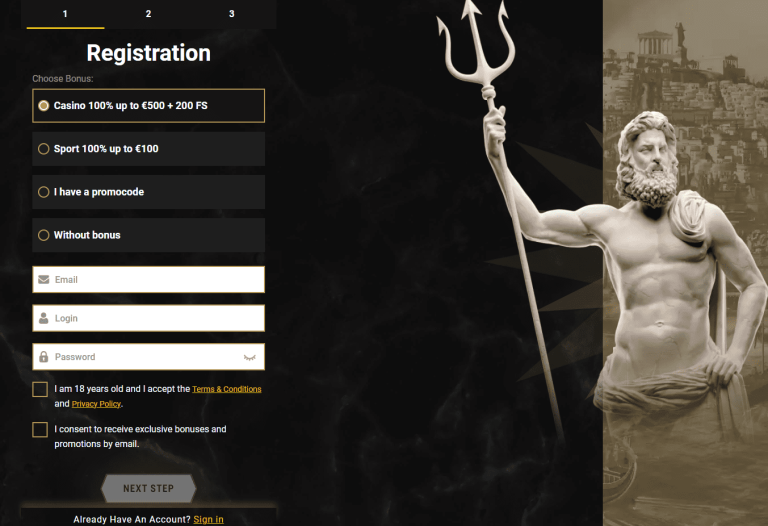
The registration form at Casinoly Casino is displayed as a single-page questionnaire that collects core personal data, contact details, and account credentials. Users commence by choosing their preferred currency from the list offered for Greek residents, which typically contains euros. The next fields record first name, last name, and date of birth just as they appear on official documents; any discrepancy, such as an anglicised spelling, must be fixed before submission. A unique username is selected next, followed by a password that must contain at least eight characters, plus one uppercase letter and one number. The final stage needs entry of an email address and a Greek mobile number, after which a verification link and an SMS code are transmitted. Once both are validated, the account is set up but is in a limited state until identity verification is finished.
Picking the Correct Registration Path
Players can sign up directly on the website or through a mobile browser; the form fields remain identical, yet the mobile version instantly detects screen size and streamlines the layout. A third option exists for users who come via an affiliate link: certain partner sites pre-fill the referring code, which later affects bonus eligibility. No matter entry point, the system logs the device fingerprint and IP address, data that are later verified during the verification stage. If a user initiates registration on one device and tries to verify on another, an additional security prompt may pop up asking for confirmation of the new device.
Managing Data Entry Errors
Typographical mistakes in names or birth dates cannot be changed after the initial submission. The only solution is to contact customer support, provide supporting identification, and request a manual correction; such requests are usually processed within one business day. To avoid this delay, players are encouraged to type information directly from their passport or identity card rather than relying on memory. Passwords, by contrast, can be modified at any time through the account settings menu, provided the user can still receive two-factor codes on the registered phone number.
Accessing Your Account and Administering Password Recovery
Once verification is approved, complete account access—including deposits, gameplay, and withdrawals—is activated. The login page demands the registered email address or username together with the password chosen at registration. For security reasons, repeated failed login attempts cause a temporary lockout that grows in duration with each subsequent failure: five minutes after the third attempt, thirty minutes after the fifth. Unlocking requires either waiting out the timer or contacting live chat with sufficient identity details to satisfy the support agent.
Reset Password Procedure
Users who lose their password click the “Forgot password” link, which prompts input of the registered email address. A time-limited reset link is sent; the link remains valid for two hours. After the new password is set, the system automatically terminates all existing sessions on other devices, requiring a fresh login everywhere. If the user no longer has access to the original email account, support will request a new verification round, including a selfie holding the identity document, before permitting a manual password change.
Two-Factor Authentication Setup
Two-factor authentication (2FA) is strongly suggested and can be enabled right away after first login. The system supports authenticator applications that generate six-digit codes; SMS-based 2FA is also accessible but considered less secure. During setup, a QR code is displayed; users scan it with their chosen authenticator app and enter the first generated code to confirm correct configuration. Once active, every login from a new device or browser will ask for the current 2FA code in addition to the password. Disabling 2FA later demands a support ticket and a fresh identity check, a policy intended to prevent unauthorised removal by potential account hijackers.
Safeguards Protecting Player Accounts
Casinoly Casino implements multiple layers of protection that go beyond 2FA. All pages handling personal or financial data are encrypted with TLS 1.3, and the site undergoes quarterly penetration testing by an independent security firm. Login sessions expire after thirty minutes of inactivity, lowering the risk of unauthorised access from shared or public computers. In addition, the operator watches for unusual betting patterns or rapid changes in account details; such events activate automated alerts that may temporarily freeze withdrawals until the account holder confirms the activity via email or phone.
Recognising and Reporting Suspicious Activity
Players should periodically review their login history, accessible under the security tab of the account menu. Each entry shows date, time, device type, operating system, and approximate location derived from IP address. If an entry emerges from an unfamiliar city or country, users are advised to change their password immediately and to contact support so that the session can be terminated server-side. The casino also supplies a dedicated email address for reporting phishing attempts or suspected social-engineering attacks; reports are received within one hour during business days.
Gadget and Network Recommendations
Although the platform is available from any modern browser, security is optimised when players use official applications downloaded from the Apple App Store or Google Play, because these versions incorporate certificate pinning that blocks man-in-the-middle attacks. On desktop, the latest stable release of Firefox, Chrome, or Edge is recommended. Public Wi-Fi networks should be bypassed for login or financial transactions; if travel demands their use, a reputable virtual private network (VPN) configured for split tunnelling can isolate casino traffic from other devices on the same network.
Document Requirements and Personal Identification
Identity verification, often termed KYC, is mandatory under Greek gambling laws and must be carried out before deposits exceed a threshold set by the operator. Casinoly Casino receives colour scans or clear photographs of a national identity card, passport, or driving licence. The document must show the applicant’s full name, a clear photograph, date of birth, and expiry date; temporary paper copies or expired documents are rejected. In addition, a recent utility bill or bank statement provided within the last three months is required to confirm residential address. Both documents must display the identical address that was submitted during registration. Files should be stored in JPEG or PDF format and should not go over five megabytes each, because larger attachments are automatically rejected by the upload portal.
Document Submission Procedure
After accessing the newly created account, users go to the verification section, where two upload boxes are presented: one for identity and one for proof of address. βουτήξτε μέσα Once files are picked, a progress bar indicates upload status; users should stay on the page until a green confirmation message is displayed. The compliance team normally checks submissions within twenty-four to forty-eight hours, although peak periods such as weekends or public holidays may extend this to seventy-two hours. During review, the account balance is shown but withdrawal functions remain blocked.
Frequent Reasons for Verification Rejection
Rejections most often stem from image quality issues: glare on a laminated card, cropped edges that omit the document number, or shadows that cover text. Another frequent cause is mismatched information—for example, a registered address that varies from the one printed on the utility bill. When a submission is rejected, an email notification details the specific problem and invites the user to upload revised files. Applicants are permitted three attempts; after the third unsuccessful submission, the account is forwarded to the compliance department for manual review, which can lengthen processing time by an additional three to five business days.

Deposit and Withdrawal Limits Tied to Verification Status
Account verification directly affects the financial limits granted to each player. Prior to verification, the maximum cumulative deposit is set at two hundred euros, and withdrawals are disabled entirely. Upon the first successful KYC review, the deposit ceiling rises to five thousand euros per month, while withdrawal limits begin at one thousand euros per transaction and ten thousand euros per month. Higher limits can be applied for by submitting additional source-of-funds documentation, such as three months of bank statements or employment contracts; each request is reviewed individually and may require up to five business days for approval.
Payment Method Verification
Some payment providers need their own verification step before handling large withdrawals. For example, when using a credit card, the operator may request a photo of the physical card showing only the last four digits and the cardholder’s name. E-wallets such as Skrill or Neteller usually rely on the verification already performed by the wallet provider, yet the casino still cross-checks that the wallet account name matches the verified name on file. Any mismatch leads to a request for updated documents rather than an automatic rejection, allowing the player to correct the discrepancy without going through the entire KYC process.
Processing Times and Fees
Electronic wallet withdrawals are typically completed within twenty-four hours after verification, while bank transfers may need two to five business days depending on the receiving bank’s internal procedures. No fees are imposed by Casinoly Casino for withdrawals that fall within the monthly limit; however, the player’s own bank or e-wallet may levy charges, and these are beyond the operator’s control. Players are advised to review the fee schedule made available by their chosen payment method before submitting a withdrawal exceeding one thousand euros.
Fixing Frequent Account Issues
Even when all steps are followed correctly, users from time to time encounter obstacles such as blocked accounts, delayed verification, or repeated deposit failures. The first advised action is to clear browser cache and cookies, because corrupted session data can stop the verification status from updating. If the problem persists, the live-chat feature—available in English and Greek—provides direct access to support agents who can forward technical issues to the appropriate department. Before reaching support, users should gather their account ID, the approximate time of the issue, and any error messages displayed, because this information speeds up diagnosis.
Account Lockouts and Reactivation Process
Accounts may be frozen automatically after numerous failed login attempts, after discovery of VPN usage from a banned jurisdiction, or following a withdrawal request that triggers internal risk rules. Re-enabling requires identity confirmation via a video call or a new set of documents; the exact condition is sent by email. Players should avoid creating multiple accounts to circumvent a lockout, because such actions violates the terms of service and can lead to permanent closure of all related accounts and confiscation of any pending balances.
Identity Document Re-submission
Upon document rejection, the verification portal displays a summary of the problem and a button to upload new files. Users must resolve each listed issue separately—for instance, cropping a passport photo so that all four corners are visible, or ensuring that a utility bill shows the issue date within the last ninety days. If the portal continues to reject files that appear correct, reaching out to support with the file names and the exact rejection message can prompt a manual review that skips automated filters.
Escalation Path for Ongoing Issues
Should an issue remain unresolved after two interactions with standard support, players can seek escalation to the compliance or security team by emailing a dedicated address published in the terms and conditions. The escalation request should include a chronological summary of previous communications, ticket numbers, and the desired outcome. Responses to escalated tickets are sent within three business days, and the operator commits to offering a clear explanation of any decision that affects account access or fund availability.
Leave a Reply